

Energy & environment

Most investor-state disputes (ISDS) have concerned environmental matters. Corporations are using the ISDS system found in trade and investment agreements to challenge environmental policies. As of end of 2019, 41% of all ICSID cases were energy and natural resources-related.

Most well-known cases include:

• Lone Pine Resources (US) vs. Canada: the investor challenged Quebec’s moratorium on the controversial practice of hydraulic fracturing, or fracking, for natural gas. The provincial government declared the moratorium in 2011 so as to conduct an environmental impact assessment of the extraction method widely accused of leaching chemicals and gases into groundwater and the air. Case pending (NAFTA invoked).

• Bilcon (US) vs. Canada: the US industry challenged Canadian environmental requirements affecting their plans to open a basalt quarry and a marine terminal in Nova Scotia. In 2015 the ISDS tribunal decided that the government’s decision hindered the investors’ expectations. Bilcon won and received US$7 million in damages, plus interest (NAFTA invoked).

• Vattenfall (Sweden) vs. Germany: in 2007 the Swedish energy corporation was granted a provisional permit to build a coal-fired power plant near the city of Hamburg. In an effort to protect the Elbe river from the waste waters dumped from the plant, environmental restrictions were added before the final approval of its construction. The investor initiated a dispute, arguing it would make the project unviable. The case was ultimately settled in 2011, with the city of Hamburg agreeing to the lowering of environmental standards (ECT invoked).

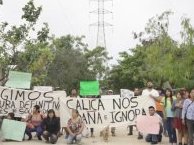
Photo: Kris Krug / CC BY-NC-ND 2.0

(March 2020)

Reuters | 6-Feb-2026
In this investment dispute, Berkeley claims that Spain’s actions against its Spanish subsidiary, Berkeley Minera España, and the SalamancAustralia’s Berkeley Energia filed a memorial of claim for about $1.25 billion against Spain at the World Bank’s arbitration tribunal, up from a previous request, over the blocked Salamanca uranium project.
The Brussels Times | 4-Feb-2026
The European Commission has launched new legal steps against several EU countries over energy-related obligations, including continued participation in the Energy Charter Treaty.
El Confidencial | 2-Feb-2026
La reciente sentencia de 24 de noviembre de 2025 del Tribunal del Distrito de Columbia, en el caso Blasket Renewable Investments LLC vs. Reino de España, marca un punto de inflexión en la ejecución de laudos arbitrales CIADI en Estados Unidos y tiene unas profundas implicaciones para España.
European Commission | 23-Jan-2026
The European Commission has opened an in-depth investigation to assess whether an arbitration award, in which Bulgaria is ordered to pay compensation to ACF for changes to a renewable electricity support measure, is in line with EU State aid rules.
Inside Climate News | 23-Jan-2026
As Mark Carney urges value-based leadership, critics point to trade rules championed by Canada that undermine those ideals.
UNN | 23-Jan-2026
The Arbitration Tribunal in Stockholm rejected the claim of the foreign investor Modus Energy International B.V. regarding changes to the "green tariff".
Minute Mirror | 23-Jan-2026
The dispute stems from an October 2016 agreement to sell a majority stake in K-Electric to Shanghai Electric Power Company.
SOMO | 22-Jan-2026
Shell is suing the Netherlands in yet another attempt to evade its responsibility for decades of gas extraction in Groningen.
Energiminas | 19-Jan-2026
Lupaka Gold podría intentar hacerse con ciertos activos estatales peruanos a menos que el país le pague el laudo arbitral. El presidente de Lupaka, Gordon Ellis, afirmó que se ha identificado a la petrolera nacional peruana, Petroperú, que tiene “enormes deudas y paga grandes cantidades de dinero por ellas regularmente”, como un posible objetivo.
Seneweb | 17-Jan-2026
Dans le bras de fer fiscal qui l’oppose à l’Etat du Sénégal, Woodside avait saisi le CIRDI de la Banque mondiale, le 30 mai 2025. Ce, après avoir aussi déposé une plainte au Tribunal de Dakar. Depuis, la procédure a bien évolué au niveau de l’instance arbitrale.